These are all-time favorite books – some are about architecture and some are not

In Praise of Shadows
by Junichiro Tanizaki
An argument for a way of living and design that emphasizes continuous and growing engagement with space, materials, and objects through ongoing calm contemplation. From views out of traditional toilets to light flickering in miso soup to distaste for uniformity of modern lighting, Tanizaki reveals his emphasis on atmosphere, material honesty, and time as design tools. This book stood a test of time as defender of slowness, ambiguity, and softness. I have loved this book – flaws and all – for two decades now and re-reading it delights me every time.
Where to find it:
This book can sometimes be found in local public libraries – check there first!

Thinking Architecture
By Peter Zumthor
This book taught me that a sensory approach to architecture is valid and valuable; that buildings are about how they are felt and inhabited. Zumthor resists style and form-based design approaches; he resists spectacle and individualism; rather it is about atmosphere that is felt emotionally and with the body. It is about material, light, sound, and temperature coming together as a presence. The design proves itself over time rewarding repeated lived experience. Even reading the book is like a spatial experience, there is something about the prose that represents the design approach itself – it is short but incredibly deliberate. There is space between the words.
Where to find it:

Atmospheres
By Peter Zumthor
This is a follow up to Thinking Architecture and a continuation on what is atmosphere as a design aim: light, material, proportion, sound, intimacy, and temperature. These are not nice-to-haves, but at the very core of the design. When I read about this, I consider the tension between our conscious and unconscious design strategies and our experience of architecture as a priori versus a posteriori. In today’s world, atmosphere is more genuine outcome for the building’s occupant than one that is laden with conscious or unconscious architectural messages; the extreme editing of design is necessary to ensure that this outcome prevails, with people at the centre of architecture.
Where to find it:
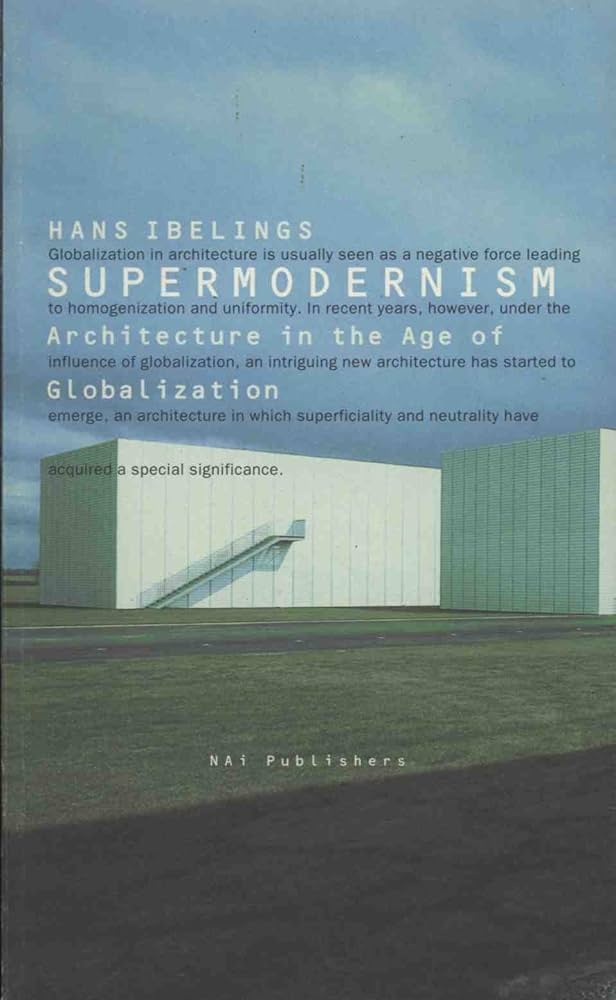
Supermodernism:
Architecture in the Age of Globalization
by Hans Ibelings
Ibelings surveys the prevalence of anonymously global architecture that generally looks the same wherever one goes. Typically minimalist, monolithic, transparent or translucent, airy and monochromatic, they are visually simple, clean, and neutral. This architecture is devoid of overt meaning and narrative, and is largely phenomenological, appealing to experiences rather than ideas or narratives. It is about return to qualities of space, to visual and tactile sensations, rejecting any type of infusing of meaning. Reading this book led me to consider whether that is how I saw – these buildings do say a lot, but it is not something we are comfortable with. To me this architecture is not one with a lack of meaning, but a meaning with which we struggle.
Where to find it:
This is a tough one. I would recommend checking out university and college libraries. There are only a few copies between these Amazon sites, and they are all second hand.
Thinking, Fast and Slow
by Daniel Kahneman
You have probably already read this one. If you have not, this is the one. A goliath. Read it. It changed my life. Kahneman discusses two cognitive systems: one based on shortcuts and heuristics and one that is based on slow and deliberate analytical thinking. Both of these have time and place in one’s overall thinking – but it helps to be aware of benefits and shortcomings of either. This book not only impacted how I make everyday decisions, it has completely changed my design approach and my process. For an architect, I had to take a more critical look at how we use rules of thumb, strategies, and techniques, and what biases or outdated ideas did these perpetuate. It reinforced my dedication to principle-based design.
Where to find it:
It is very likely that you can get it from your local public library – check there first!
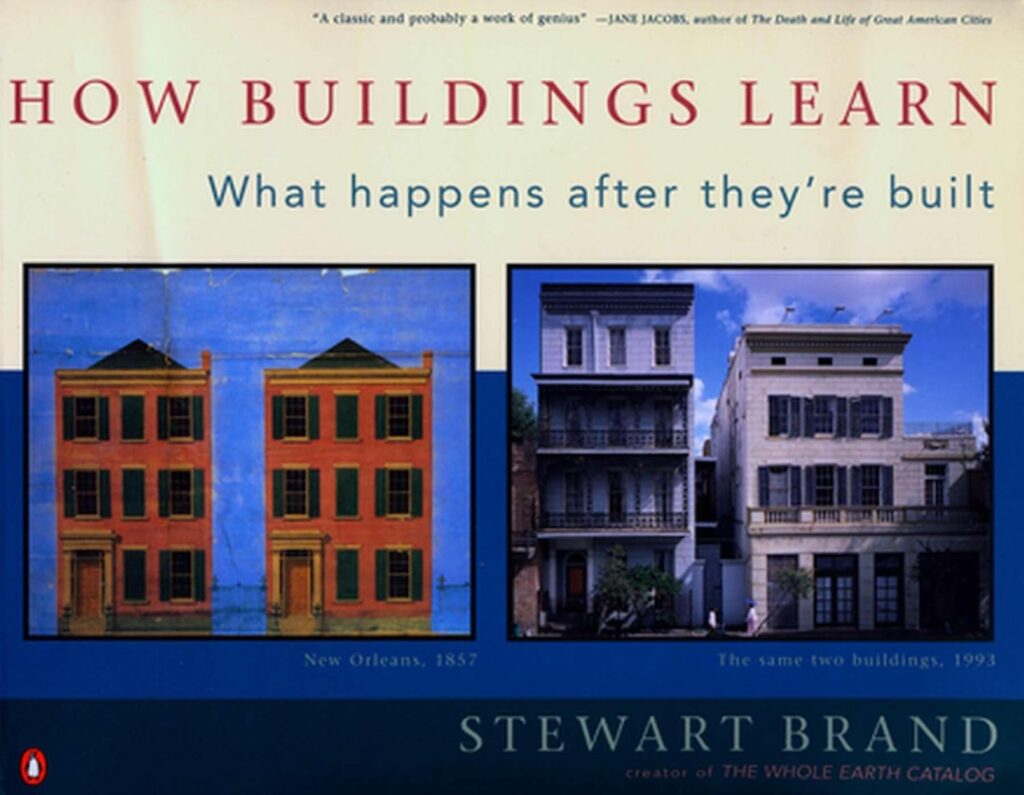
How Buildings Learn:
What Happens After They’re Built
by Stewart Brand
When I first read this book I thought it provided excellent insights into building reuse, but over the last twenty years, I have come back to its core lessons many times as principles for design, not just reuse. There is specifically one diagram that has become a go to for me that summarizes the book for me – a little house-like icon that illustrates “shearling layers” of change. Brand argues that the building’s flexibility and adaptability is what makes it truly valuable. For me that means that architect’s have to cede a measure of control from the beginning and design not just for today, or for the future, but for ambiguity – the only thing one can be sure of. Only time proves if the building is timeless.
Where to find it:
Did you find this interesting? Sign up here for future posts and stories